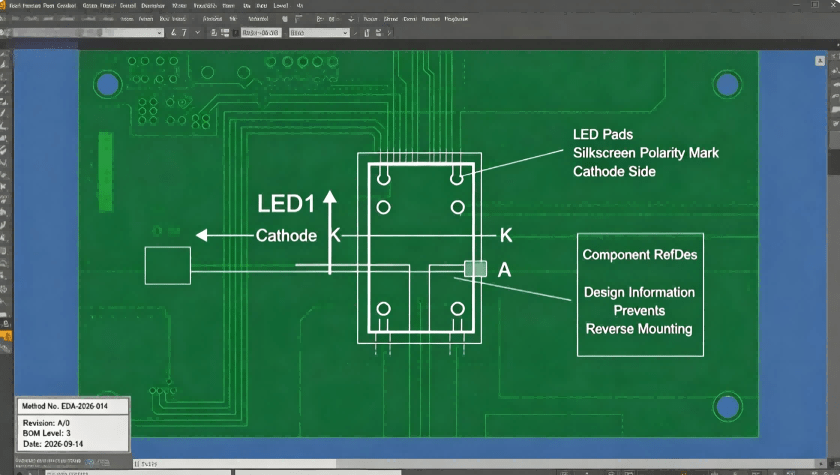
SMT Assembly Services & Advanced PCBA Manufacturing Equipment for Zero-Defect Production
SMT assembly services involve automated placement, soldering, and inspection of electronic components onto printed circuit boards using high-speed machines and controlled processes. At HCJMPCBA, this process is enhanced through Method Number + Revision control, real-time raw data logging, and full traceability, ensuring consistent and reliable PCBA mass production.
Modern electronics manufacturing is no longer defined by machines alone—it is defined by process control, repeatability, and data transparency.
At HCJMPCBA, our facility integrates:
- Automated SMT production lines
- Precision electronic assembly systems
- Multi-layer inspection technologies
- Full traceability (lot/batch/serial)
This allows global OEM clients to achieve stable, scalable, and audit-ready PCBA production, even when manufacturing remotely.
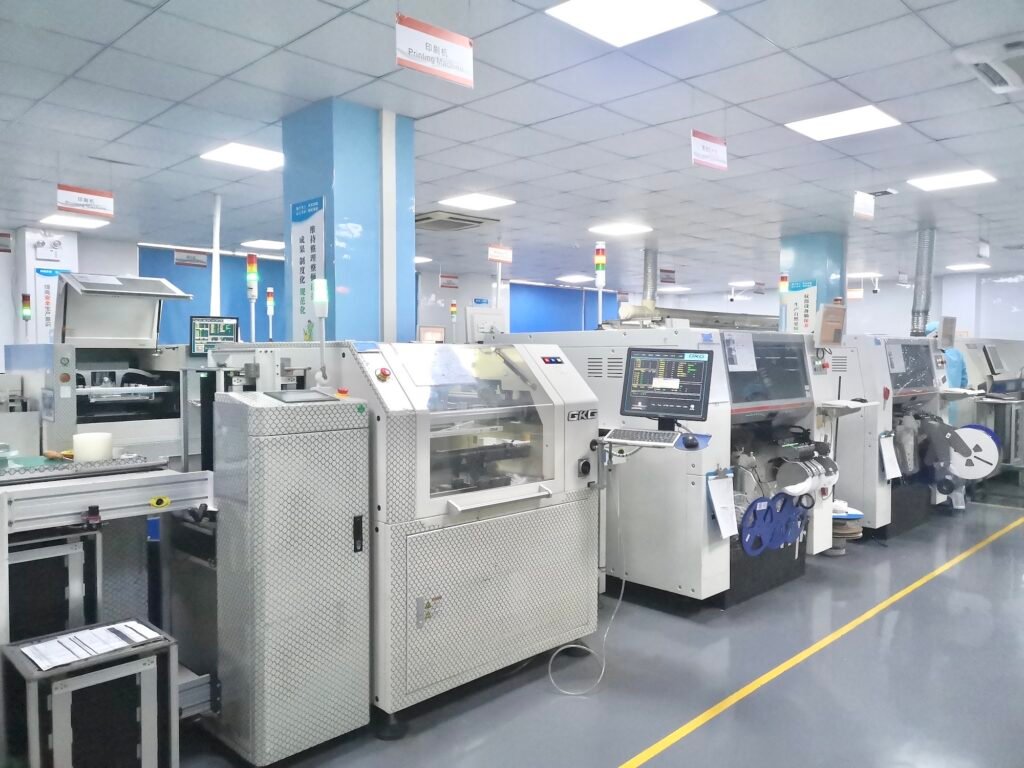
HCJMPCBA operates 4 fully integrated SMT assembly lines, designed for both high-speed placement and high-mix production.
SMT Line Architecture:
- Board Loader System
- Solder Paste Printing Machines (G5 / GSE)
- 3D SPI Inspection (S208)
- High-Speed Placement (Samsung SM481 Plus ×3)
- Flexible Placement (SM471 / SM421 / SM482)
- Lead-Free Reflow Soldering (Heller 1809EXL / 1913 MK3)
- AOI Inspection (Online + Offline)
- First Article Inspection (FAI)
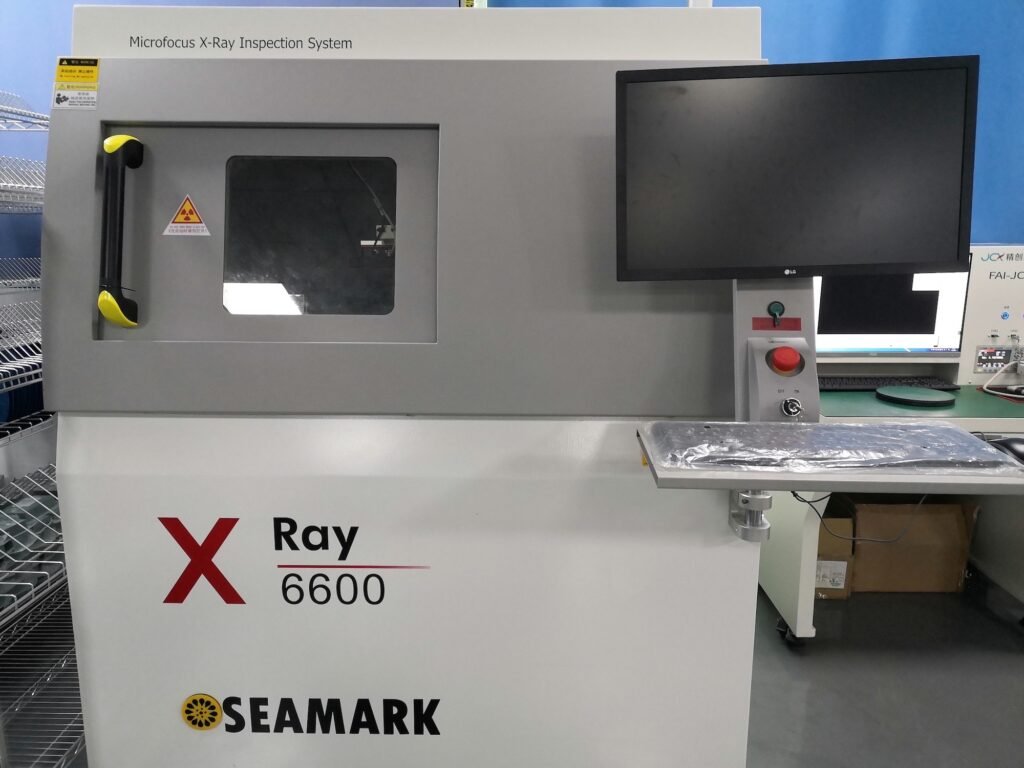
- X-Ray Inspection (BGA verification)
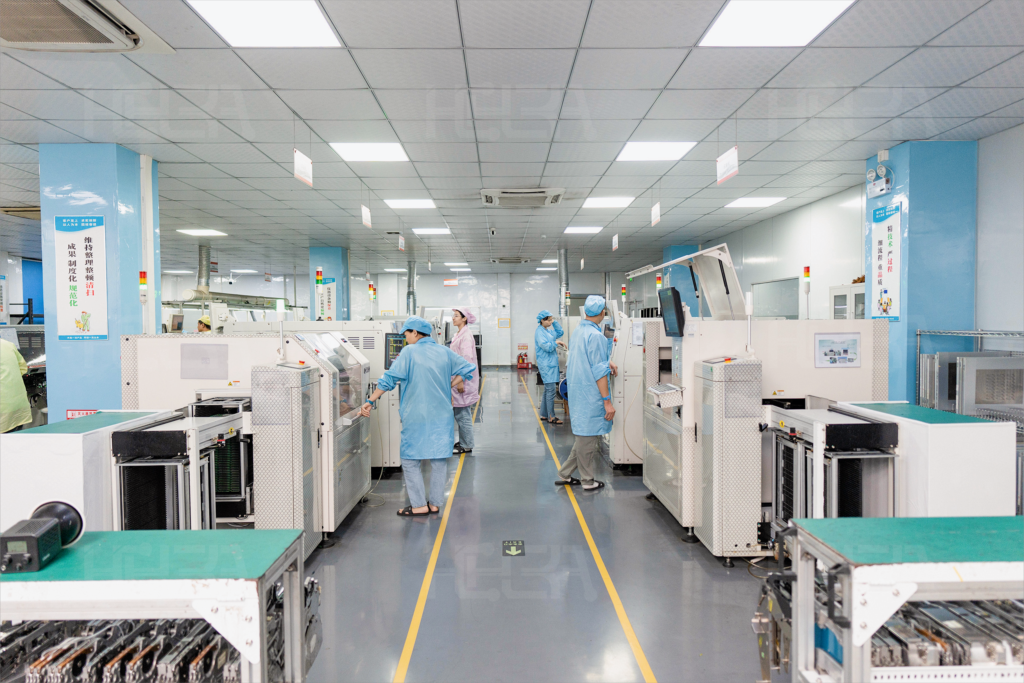
Samsung High-Speed Placement Technology: Precision at Industrial Scale
Our SMT lines utilize advanced Samsung placement systems, including SM481 Plus, SM471, and SM482 platforms.
Engineering Capabilities:
- High-speed placement up to 40,000 CPH
- Support for ultra-small components (01005)
- Stable mounting for fine-pitch BGA and QFN
- Flying vision alignment system
Why It Matters:
Unlike conventional placement, flying vision alignment allows real-time correction during motion, resulting in:
- Reduced misalignment
- Lower component waste
- Higher yield rates
This directly translates into lower production cost and higher reliability for customers.
| Process Stage | Equipment | Capability & Value |
|---|---|---|
| Board Loading | Automatic Loader | Ensures continuous and stable feeding for high-volume production |
| Solder Printing | Stencil Printer | High precision solder deposition ensures strong solder joints |
| Inspection | 3D SPI Machine | Detects solder paste volume, height, and alignment defects |
| Component Placement | Samsung High-Speed Pick & Place | ±0.025mm accuracy supports BGA, QFN, and fine-pitch components |
| Multi-function Placement | Samsung Multi-function Machine | Handles complex and irregular components efficiently |
| Reflow Soldering | Heller Reflow Oven (USA) | Precise thermal profile control ensures reliable solder joints |
| Inspection | Offline AOI (2 Units) | Detects soldering defects and placement errors |
| Inspection | AI AOI System | Advanced defect recognition with reduced false detection |
| First Article | First Article Tester | Ensures correctness before mass production |
| Advanced Inspection | X-Ray (BGA Inspection) | Detects hidden solder defects in BGA and complex packages |
Integrated Inspection System for Zero-Defect Manufacturing
Quality at HCJMPCBA is not a final step—it is built into every stage.
Inspection Framework:
1. 3D SPI (Solder Paste Inspection)
- Detects volume and alignment before placement
- Prevents solder defects at the source
2. AOI (Automated Optical Inspection)
- Real-time defect detection
- Ensures IPC-A-610 Class 3 compliance
3. X-Ray Inspection
- Verifies hidden solder joints (BGA, QFN)
- Critical for high-reliability electronics
DIP Assembly & Mixed Technology Manufacturing
Beyond SMT, HCJMPCBA provides complete DIP assembly solutions:
Equipment:
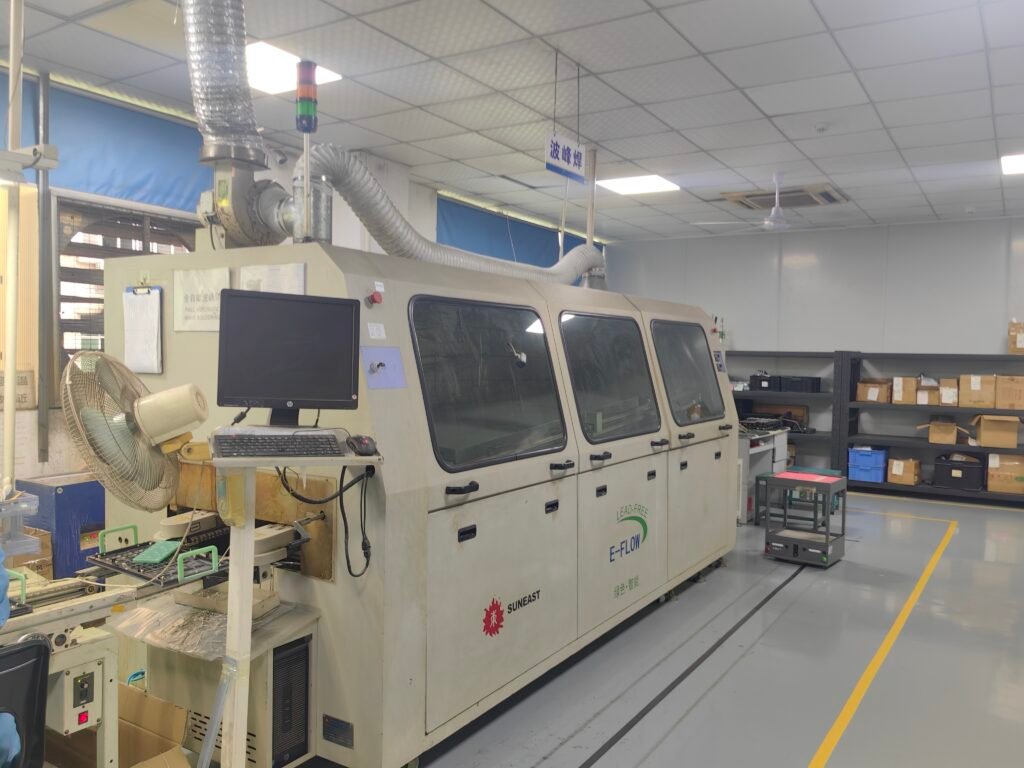
- Wave Soldering Machine (E-FLOW)
- Selective Wave Soldering (MSO-400C)
- Manual & automated soldering stations
- Lead cutting and forming equipment
Applications:
- Industrial control boards
- Power electronics
- Automotive modules
Post-Assembly Processing & Product Finishing
To meet environmental and reliability requirements:
- Conformal coating systems
- Laser marking for traceability
- PCB depaneling machines
- Vacuum packaging
These processes ensure:
- Environmental protection
- Product identification
- Safe global shipping
Environmental Control & Component Storage
Material integrity is critical in PCBA manufacturing.
Control Systems:
- Moisture-proof cabinets
- Nitrogen generation systems
- Dehumidifiers
- Refrigerated storage
Impact:
- Prevents oxidation
- Improves solderability
- Ensures long-term reliability
Methodized Quality Control: The HCJMPCBA Standard
Every project is managed through:
Method Number + Revision
Each production run is assigned:
- Fixed machine parameters
- Defined temperature profiles
- Locked inspection thresholds
Result:
- Repeatable production
- Zero process drift
- Consistent output across batches
Full Traceability and Raw Data Transparency Consistent output across batches
Each PCBA unit is linked to:
- Component lot number
- Production batch
- Machine settings
- Inspection results
All data is stored and available for audit.
| Capability | Standard Factory | HCJMPCBA Execution |
|---|---|---|
| Placement Accuracy | ±50µm | ±30µm with high-speed systems |
| Inspection | AOI only | SPI + AOI + X-Ray |
| Traceability | Batch only | Lot / Batch / Serial |
| Process Control | Manual | Method Number + Revision |

Common Mistakes When Choosing a PCBA Manufacturer
- Focusing only on equipment, not process control
- Ignoring traceability requirements
- No access to raw data
- Weak inspection system
- No repeatability between batches
Manufacturing Capability Overview
| Capability | HCJMPCBA Standard |
|---|---|
| SMT Lines | 4 Production Lines |
| Placement Accuracy | ±0.025mm |
| Component Size | 0201 / 01005 optional |
| BGA Capability | 0.3mm pitch |
| Inspection Coverage | SPI + AOI + X-Ray |
| Traceability | Lot / Batch / Serial |
A client experienced a 5% failure rate due to inconsistent soldering.
After implementing:
- Method Number control
- SPI + AOI integration
- X-Ray validation
Failure rate dropped below 0.1%.
What is SMT assembly?
SMT assembly is the process of mounting electronic components onto PCBs using automated machines.
What equipment is used in SMT production?
Key equipment includes solder paste printers, pick-and-place machines, reflow ovens, AOI, SPI, and X-Ray systems.
Why is traceability important in PCBA?
Traceability allows manufacturers to track defects back to specific batches or components.
What is the difference between AOI and SPI?
SPI checks solder paste before placement, while AOI inspects solder joints after reflow.
Can HCJMPCBA handle high-volume production?
Yes, our automated SMT lines and process control systems support stable mass production.
Conclusion: From Equipment to Engineering Control
At HCJMPCBA, our advantage is not just equipment—it is how we control and standardize it.
By combining:
- Advanced SMT machines
- Integrated inspection systems
- Methodized production control
- Full traceability
We deliver reliable, scalable, and risk-controlled PCBA manufacturing.
CTA
Update triggers: standard revision changes / recurring questions / production checklist updates.