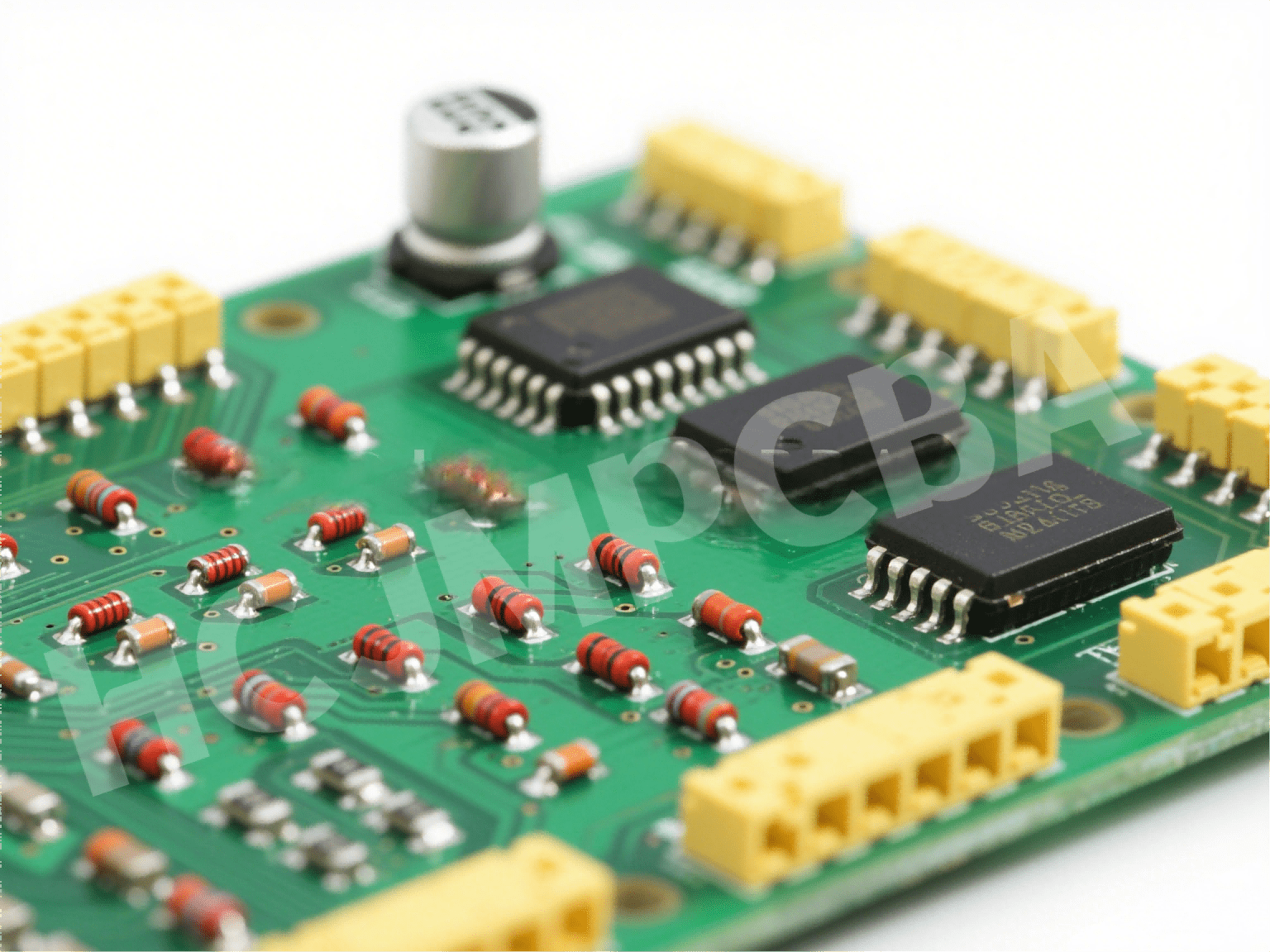
What Is a PCB? A Comprehensive Guide to Printed Circuit Boards
A PCB (Printed Circuit Board) is the foundation of modern electronics, providing mechanical support

A hipot test (short for “high potential test”) is an electrical safety validation where high voltage is applied beyond normal operating levels to a device to verify that its insulation can withstand stress without breakdown or excessive leakage. This ensures insulation integrity and prevents shock hazards and early failure in PCB/PCBA products.
1.Hipot testing (dielectric withstand test) verifies that insulation can handle voltages above normal operation without breaking down.
2.It is essential for product safety certification, manufacturing QA, and compliance with safety standards (IEC/UL/MIL).
3.Both AC and DC high potential tests are used depending on the device and standard requirements.
| Test Type | Typical Use Case | When to Use | Common Standards |
|---|---|---|---|
| AC Hipot | Most AC powered devices | Devices operating on mains voltage | IEC/UL Safety Standards |
| DC Hipot | DC circuits, specialized insulation | Devices with DC supply | Specific DC test protocols |
| VLF Hipot | Thick insulation | Cables and HV components | Power frequency tests |
Typical test voltage setup uses a high potential expected to far exceed normal working voltage per standard.
Before testing, confirm:
Device specifications and insulation requirements
Safety boundaries and grounding
Test equipment calibration and environment setup
Hong pot testers are high-voltage devices and must be set up in a controlled, isolated area.
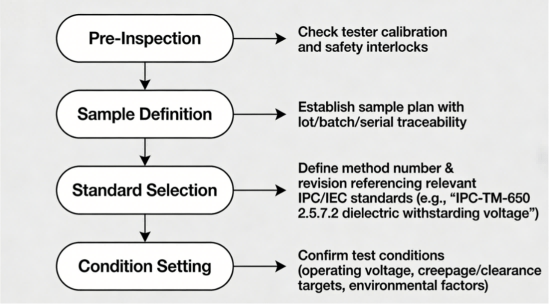
Block Diagram Of Hipot Test Preparation Process
1.Use a certified Hipot tester with programmable output voltage and leakage current monitoring.
2.Connect the high potential lead to the PCB/PCBA circuit point under test.
3.Connect tester return lead to chassis/earth ground.
4.Ensure appropriate shielding and safety barriers are deployed.
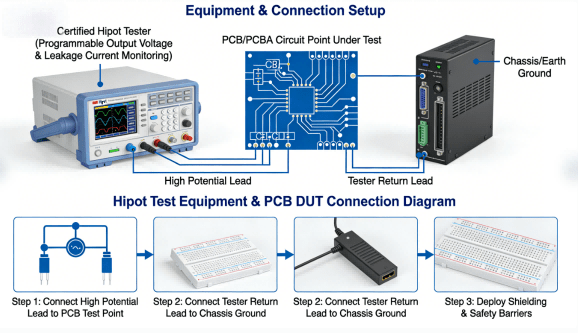
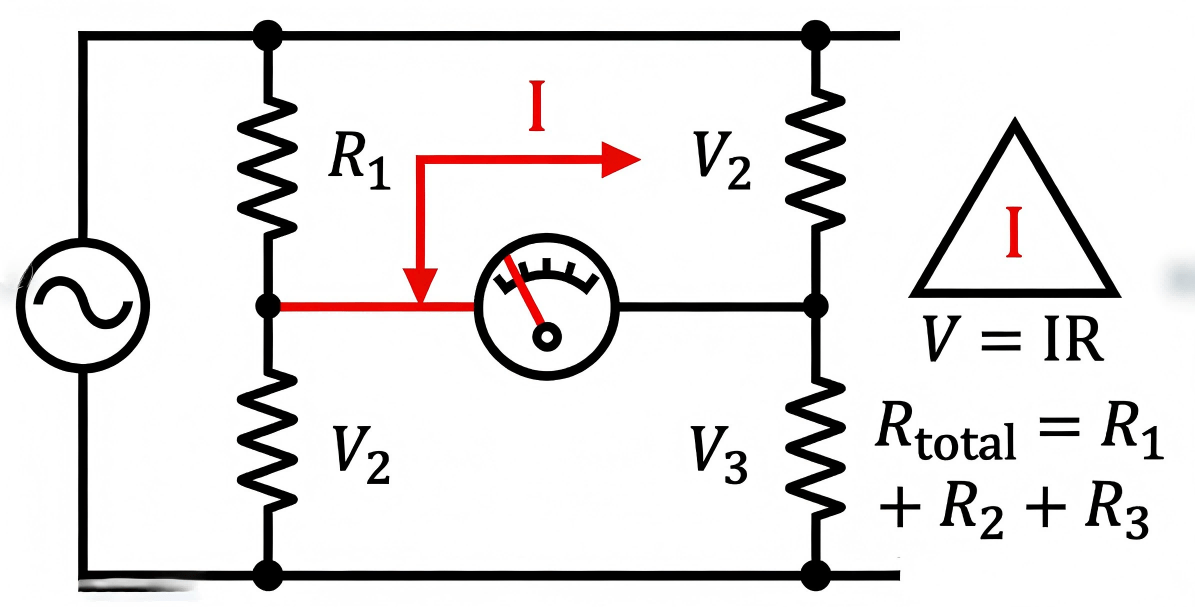
Connection Diagram Of Hipot Testing Equipment And Pcb Dut
1.Gradually ramp voltage to the specified high potential.
2.Hold the voltage for required test duration (e.g., 1 minute per standard).
3.Observe leakage current thresholds; a test passes if leakage current stays below the defined limit and there’s no breakdown.
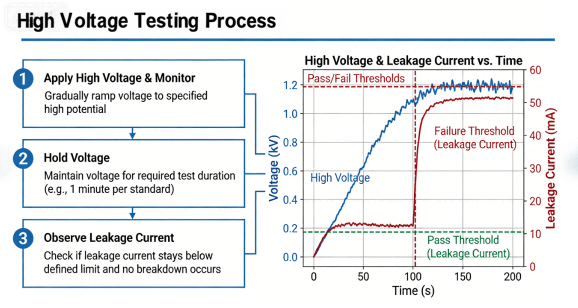
Curves Of High Voltage And Leakage Current Changes Over Time
1.Log raw data (voltage, current, time, pass/fail) by lot/batch/serial.
2.Attach method and revision numbers to reports.
3.Archive test conditions and data for audits or customer requests.
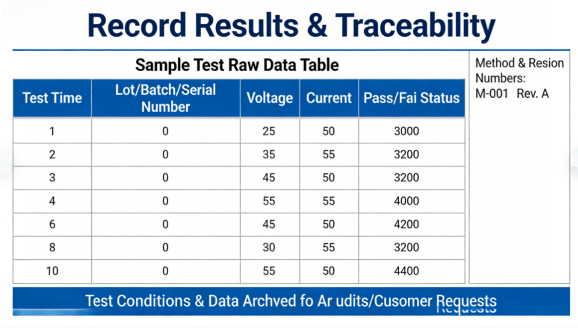
Test Result Records And Traceability
| Verification Item | Method | Acceptance Criteria |
|---|---|---|
| Leakage Current | Hipot Tester | < Max specified mA |
| No Breakdown | Withstand duration | No Arc / Flashover |
| Traceability | Lot/Batch/Serial | Tested & Logged |
| Equipment Calibration | Cal Cert | Valid & Current |
| Test Raw Data | Logged Report | Complete |
The Device Under Test (DUT) shall pass a high potential (hipot) test in compliance with applicable safety standards (e.g., IEC/UL), with leakage current below specified limits and no dielectric breakdown during the defined dwell time. All test parameters, sample plans, instrument calibration certificates, raw data logs, and traceability (lot/batch/serial) shall be provided for verification.
1.Incorrect Test Voltage Selection – Using wrong levels not aligned with standards.
2.Poor Grounding or Return Paths – Can lead to skewed results.
3.Ignoring Calibration Traceability – Without recent calibration, results are unreliable.
4.Misinterpreting Capacitive Leakage – Reactive current can be misread as insulation failure.
5.Skipping Safety Procedures – High potential tests require strict safety interlocks.
1.Final Production QA: Confirm insulation integrity before shipment
2.Prototype Validation: Detect early design defects or material weaknesses
3.Cable/Harness Production: Ensure insulation holds above maximum expected voltages
4.Product Certification: Mandatory in safety agency testing for IEC/UL compliance
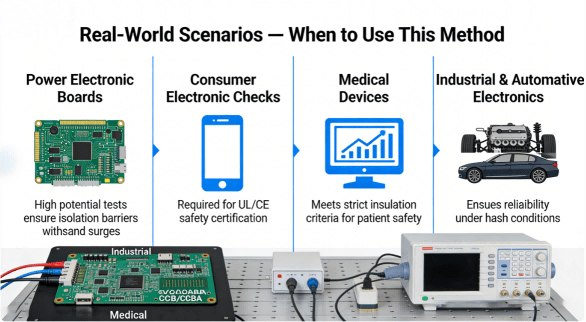
Medical, Industrial, And Automotive Pcbspcbas Are Being Tested At The Hipot Test Bench
Q:What is Hipot testing?
A:Hipot testing — short for High Potential test — is an electrical safety test that applies a high voltage to check insulation quality and prevent shock hazards.
Q:Why is it Also Called Dielectric Withstand Test?
A:Because the test stresses the device’s insulation (dielectric) to ensure it can withstand higher than normal voltages without current leakage or breakdown.
Q:Is Hipot Test AC or DC?
A:Hipot testing can use either AC or DC voltage; the choice depends on standards and device operating conditions.
Q:What Happens if a Device Fails the Hipot Test?
A:It indicates insulation is insufficient; the device is unsafe for operation under expected voltages and must be reworked or redesigned.
Q:Does Hipot Testing Damage the Device?
A:When done correctly with proper limits, it’s non-destructive; destructive testing intentionally pushes beyond limits to gauge failure characteristics.
To lower procurement and QA risk, ask for the following from your PCBA partner:
Standard Method & Revision (e.g., IEC 60950 3rd Edition)
Sample Plan (test distribution and lot plans)
Raw Data Logs (voltages, currents, timestamps)
Test Conditions (test voltage levels, dwell times)
Traceability Information (lot/batch/serial)
Hipot testing — also known as high potential test, high pot, or dielectric withstand test — is a foundational electrical safety and reliability verification step. It ensures that insulation can withstand conditions beyond normal operating voltages, prevents shock hazards, and validates manufacturing integrity.
For more information about PCBA services, please contact Guangzhou Huachuang Precision Technology(HCJMPCBA).
Update triggers: standard revision changes / recurring questions / production checklist updates.
A PCB (Printed Circuit Board) is the foundation of modern electronics, providing mechanical support

Since its establishment in 2010,Guangzhou Huachuang Precision Technology Co.,Ltd.has focused on the
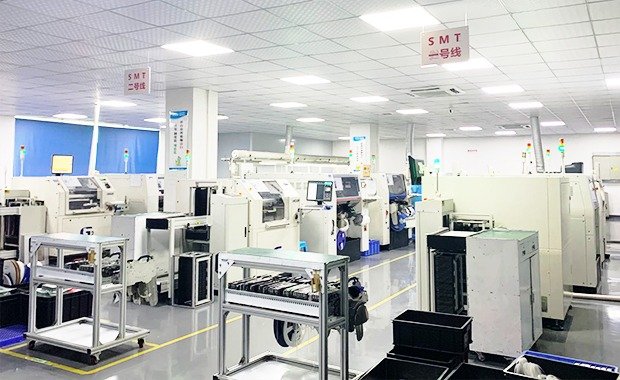
Guangzhou Huachuang Precision Technology Co., Ltd. is a leading PCBA manufacturer offering high-qual