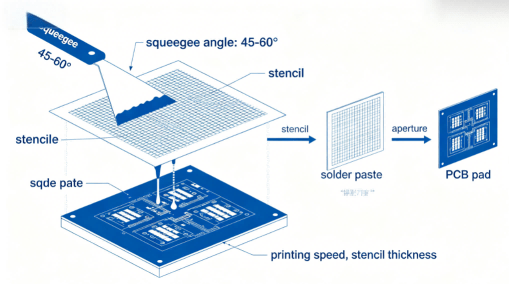
Common Stencil Printing Defects in SMT Assembly: Causes, Detection, and Prevention
Stencil printing defects — insufficient paste, bridging, cold joints, tombstoning, smearing, and

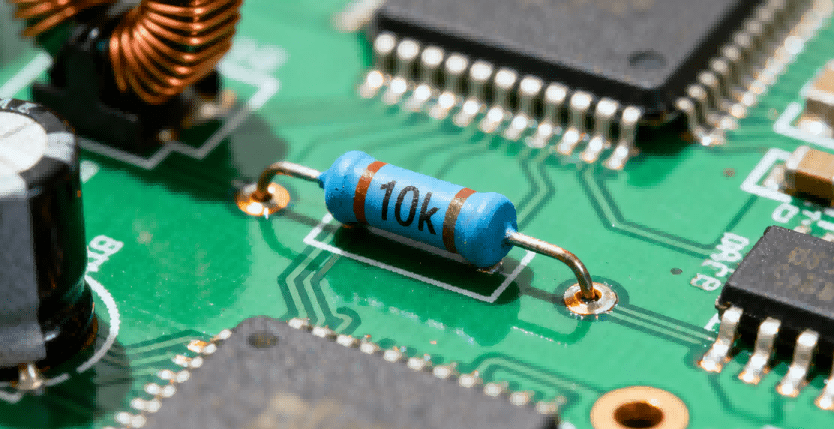
Hcjmpcba 10k Resistor On Pcba Board Voltage Divider
In modern electronics manufacturing, a 10k resistor plays a crucial role in many circuit topologies. In the context of PCBA (printed circuit board assembly), components like the 10k resistor are selected not only for their electrical value but for their compatibility with SMT/through-hole processes, reliability, and cost-effectiveness. Whether you are an OEM engineer sourcing boards for the North American or European market, or a procurement decision-maker evaluating component lists, understanding the significance of the 10k resistor can help you optimize board design, manufacturing and performance. In this article you will find how to identify, interpret and deploy 10k resistors in PCBA assembly, including color codes, typical uses and FAQs.
A 10k resistor refers to a nominal resistance value of 10 000 ohms (10 kΩ). That is, if a current of 1 mA flows through the resistor, the voltage drop would be 10 V (assuming ideal conditions). In PCBA applications, the 10k resistor is often used where moderate impedance is required—higher than typical LED resistors (hundreds of ohms) but not so high as megohm ranges. Its balance of value and size makes it versatile.
They suit voltage divider networks, pull-up/pull-down resistors, biasing circuits and filters in PCBA boards.
They are readily available in through-hole and SMT packages (e.g., 0603, 0805) for automated assembly.
They meet standard tolerances (±5%, ±1%) and support high-volume manufacturing.
Their selection affects board layout, cost and signal integrity. From a manufacturing standpoint, using a standard value like 10k simplifies BOM management and component procurement.
Thus when reviewing your PCBA project, expect the 10k resistor to appear in many circuits—so understanding its specification, color coding and role is key.
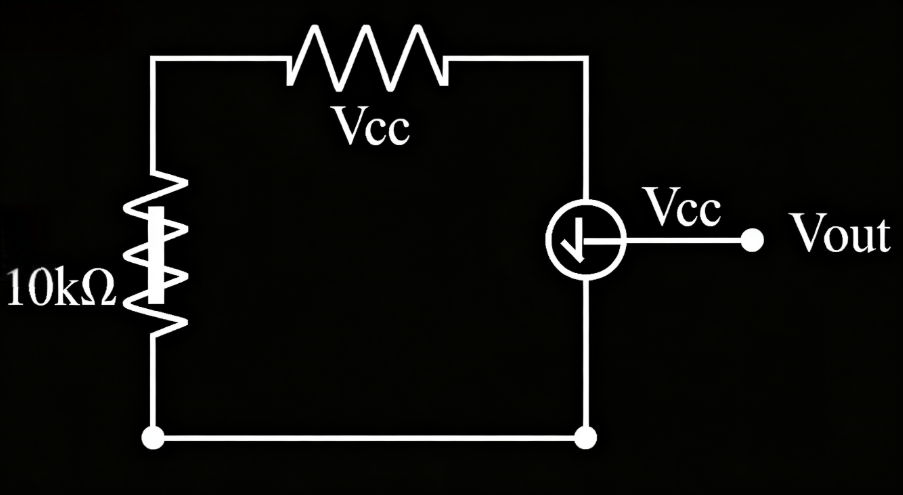
Hcjmpcba 10k Resistor On Pcba Board Voltage Divider Circuit Application
Accurate identification of a resistor’s value is essential in PCBA manufacturing. Whether you are reading a through-hole resistor on the board or verifying parts during assembly, the color code helps.
Here we discuss how to read the codes for 10k resistors and compare four-band vs five-band systems, with emphasis on PCBA engineer workflows.
A typical four-band resistor for 10kΩ with ±5% tolerance uses the following:
Band 1 (first digit): Brown (1)
Band 2 (second digit): Black (0)
Band 3 (multiplier): Orange (×1k)
Band 4 (tolerance): Gold (±5%)
Hence: Brown-Black-Orange-Gold = 10 kΩ ±5%.
This format is common in general-purpose PCBA boards where basic tolerance is acceptable.
For higher precision applications (e.g., ±1% tolerance), the five-band code is used:
Band 1: Brown (1)
Band 2: Black (0)
Band 3: Black (0)
Band 4 (multiplier): Red (×100)
Band 5 (tolerance): Brown (±1%)
Thus: Brown-Black-Black-Red-Brown = 10 kΩ ±1%.
In PCBA for automotive or medical devices where tighter tolerance is demanded, this five-band 10k resistor is preferable.

Hcjmpcba Pcba Test
| Resistor Type | Color Bands | Value | Tolerance | Typical PCBA Application |
|---|---|---|---|---|
| Four-Band | Brown + Black + Orange + Gold | 10 kΩ | ±5% | General-purpose PCBA assembly |
| Five-Band | Brown + Black + Black + Red + Brown | 10 kΩ | ±1% | High-precision / automotive PCBA |
This table presents a quick reference for PCBA engineers verifying resistor values on incoming boards, during BOM checks or during board inspection.
One of the most frequent uses of a 10k resistor in PCBA is in voltage divider circuits. For instance, in a microcontroller input stage operating at 5 V, a voltage divider made of a 10k resistor paired with another resistor can step the voltage down to 3.3 V for an ADC input.
Because the 10k value offers a reasonable impedance (less loading on the circuit while still maintaining manageable size), it is ideal for PCBA board layouts.
During prototyping phases, engineers often use standard values like 10k because they are easy to source and swap. On breadboards or perf boards, a 10k resistor might be used for pull-up/pull-down functions or as part of modular circuit blocks. When the design later transitions to PCBA manufacturing, the same value carries into SMT or through-hole formats, simplifying component selection.
In PCBA assembly, protecting LEDs, sensors, and IC inputs often involves limiting current. A 10k resistor used in series with a signal line or as part of a barrier network can prevent excessive current from damaging sensitive components. Because PCBA boards often integrate multiple modules, using the 10k resistor helps maintain system integrity with minimal cost overhead.
(Internal link: Explore our PCBA assembly services for full manufacturing capability.)
| Question | Answer |
|---|---|
| Are 10k resistors and 1k resistors interchangeable in PCBA? | No. While both values are resistors, a 10k resistor has ten times the resistance of a 1k resistor, meaning it allows much less current for the same voltage drop. Using a 10k where a 1k is required will likely degrade performance or prevent proper circuit operation. |
| How to select 10k resistors for PCBA assembly? | When selecting a 10k resistor for PCBA, engineers should consider tolerance (±5% vs ±1%), package type (through-hole vs SMT), power rating, temperature coefficient and board layout constraints. For high-reliability PCBA (automotive/medical), a ±1% five-band 10k resistor in SMT format is often preferred. |
| Can 10k resistors be combined for PCBA circuit design? | Yes. Multiple 10k resistors can be combined in series or parallel to achieve higher or lower effective values when needed. For example, two 10k resistors in parallel yield approximately 5kΩ. However, for PCBA manufacturing, it’s generally better to specify a single resistor of the correct value to simplify BOM and assembly. |
| Where to source reliable 10k resistors for PCBA production? | Reliable sourcing of 10k resistors for PCBA production means working with certified suppliers who provide traceability, lot testing and comply with industry standards (e.g., ISO 9001). HCJMPCBA supports component procurement and assembly, ensuring your 10k resistors meet board and supply-chain requirements. |
For any PCBA assembly project—from consumer electronics to industrial control modules—the 10k resistor remains an indispensable component. Its combination of value, versatility and compatibility with modern manufacturing makes it a go-to option for pull-ups, bias networks, protection circuits and prototyping.
Partnering with a trusted full-service manufacturer like HCJMPCBA ensures your resistors (including the 10k value) are correctly specified, sourced and assembled as part of a high-quality PCBA workflow. Visit us to explore how we integrate component sourcing, SMT/through-hole assembly and testing into reliable manufacturing.
👉 Learn more about PCBA services, please contact Guangzhou Huachuang Precision Technology Co., Ltd.
Stencil printing defects — insufficient paste, bridging, cold joints, tombstoning, smearing, and
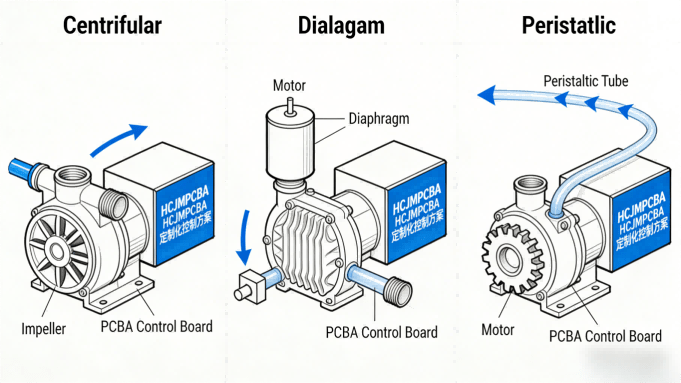
Discover what small water pumps are, its core types (submersible, solar, electric), and key applicat
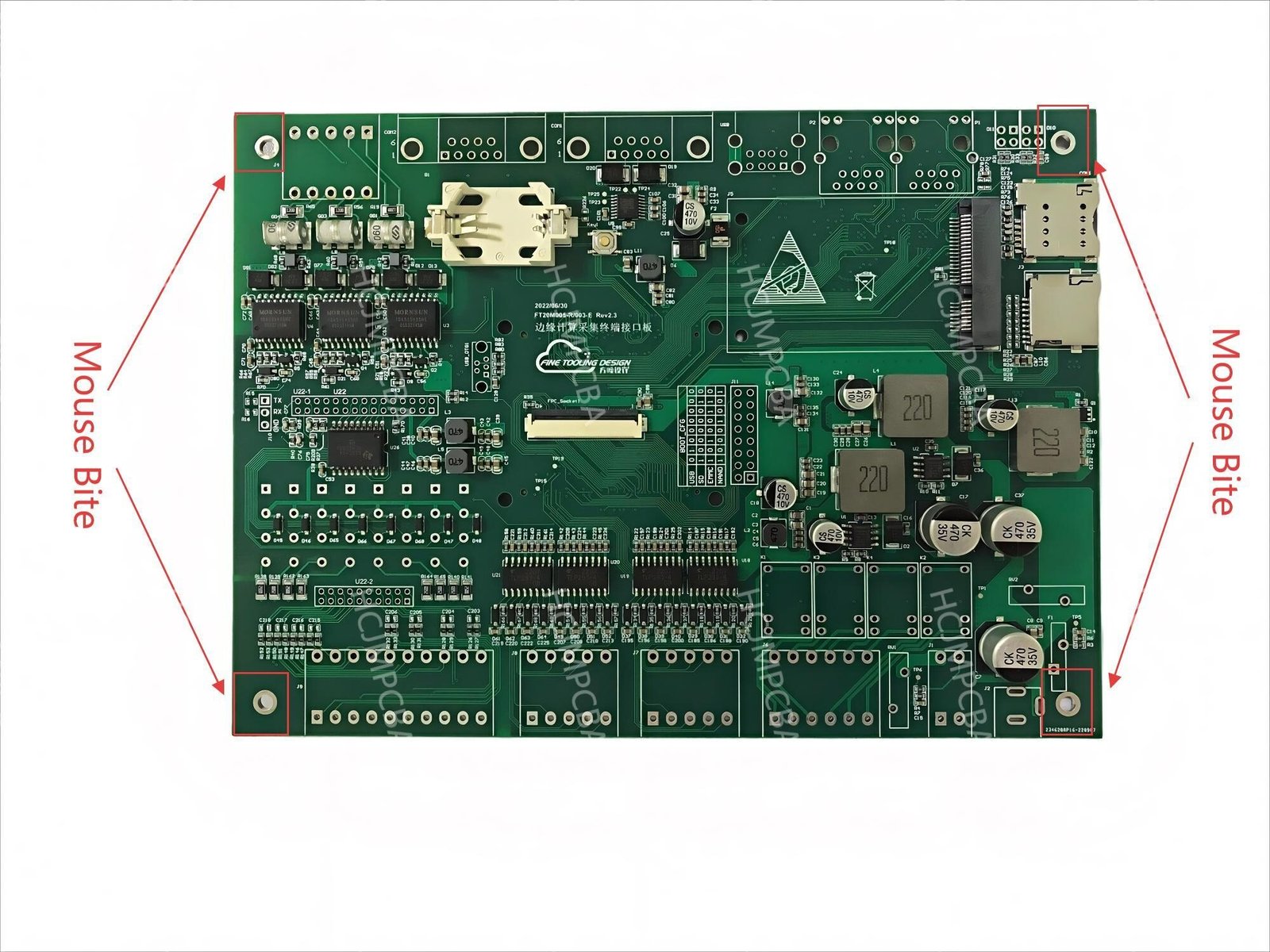
Curious what are mouse bites in PCB manufacturing? This comprehensive guide from HCJMPCBA explains m