Guangzhou Huachuang Precision Technology Co., Ltd.: A Journey of Excellence in Electronics Manufacturing
Since its establishment in 2010,Guangzhou Huachuang Precision Technology Co.,Ltd.has focused on the

A copper clad laminate (CCL) is the base material used to manufacture printed circuit boards. It consists of a dielectric substrate (such as glass fiber reinforced resin) laminated with copper foil under heat and pressure. The classification of CCL depends on reinforcement type, resin system, and performance characteristics such as Tg, Dk, and thermal stability.
This answer is validated by the HCJMPCBA engineering team using real production data, material traceability logs, and IPC-4101 compliance standards.
This guide is maintained by the HCJMPCBA engineering team and updated with production checklists.
A copper clad laminate is the foundational material of a copper clad printed circuit board. It is manufactured by impregnating reinforcement materials (such as woven glass fiber or paper) with thermosetting resin systems (ccl chemical), then laminating copper foil on one or both sides under controlled heat and pressure.
In practical terms, every copper clad pcb board used in industrial electronics begins as a CCL—making it the single most critical determinant of reliability, thermal stability, and electrical performance.
In procurement terms, the copper clad laminate price often represents 30%–60% of total PCB cost, making it the most important material-level decision.
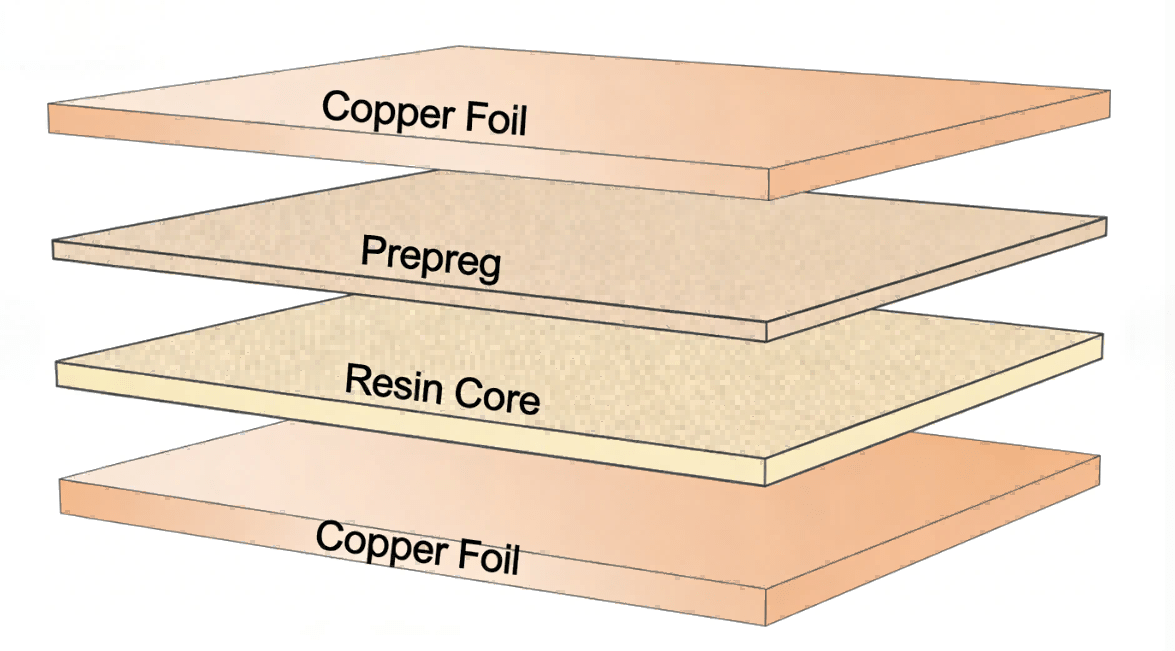
Copper Clad Laminate Cross Section Structure Hcjmpcba
| Entity | Definition | Engineering Relevance |
|---|---|---|
| Copper Clad Laminate (CCL) | Base material composed of resin + reinforcement + copper foil | Defines PCB reliability and electrical performance |
| CCL Chemical System | Resin composition such as epoxy, polyimide, PTFE | Determines Tg, Dk, thermal resistance |
| Copper Clad PCB | Finished PCB made from laminated CCL | Final product used in electronics manufacturing |
| Laminate Circuit Board | Generic term for PCB built from laminated materials | Used in industrial and consumer electronics |
| CCL Type | Base Material | Resin System | Typical Application |
|---|---|---|---|
| FR-4 | Glass Fiber | Epoxy | Industrial / General Electronics |
| CEM-1 / CEM-3 | Paper / Composite | Epoxy | Low-cost Consumer Devices |
| Metal Base | Aluminum / Copper | Thermal Resin | LED / Power Modules |
| PTFE | Glass / Ceramic | Teflon | RF / 5G / Radar |
| Flexible CCL | Polyimide | Acrylic / Epoxy | Wearables / Medical |
Trend: Glass fiber dominates high-reliability PCBA
Key resin systems:
Engineering Insight:
The ccl chemical composition directly defines Tg, Dk, and moisture absorption.
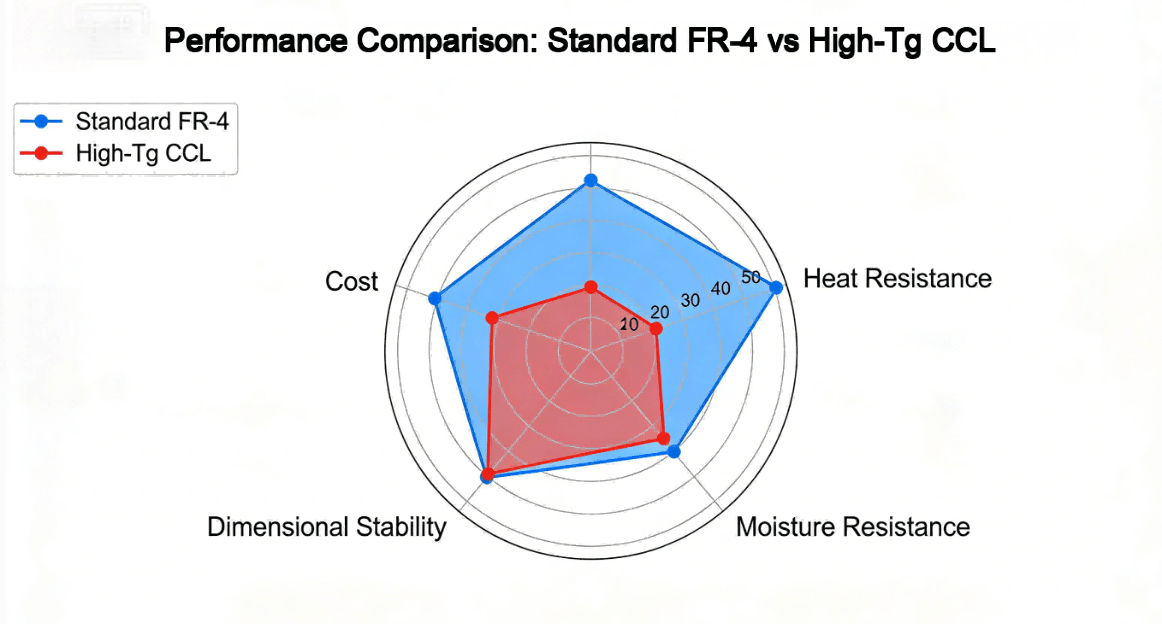
Fr4 Vs High Tg Copper Clad Laminate Performance Chart
Match Tg with soldering conditions:
For high-speed copper clad pcb:
Evaluate:
At HCJMPCBA:
Most factories:
→ Allow silent material substitution
HCJMPCBA:
→ Locks every copper clad board into:
We track:
This creates a closed-loop traceability system.
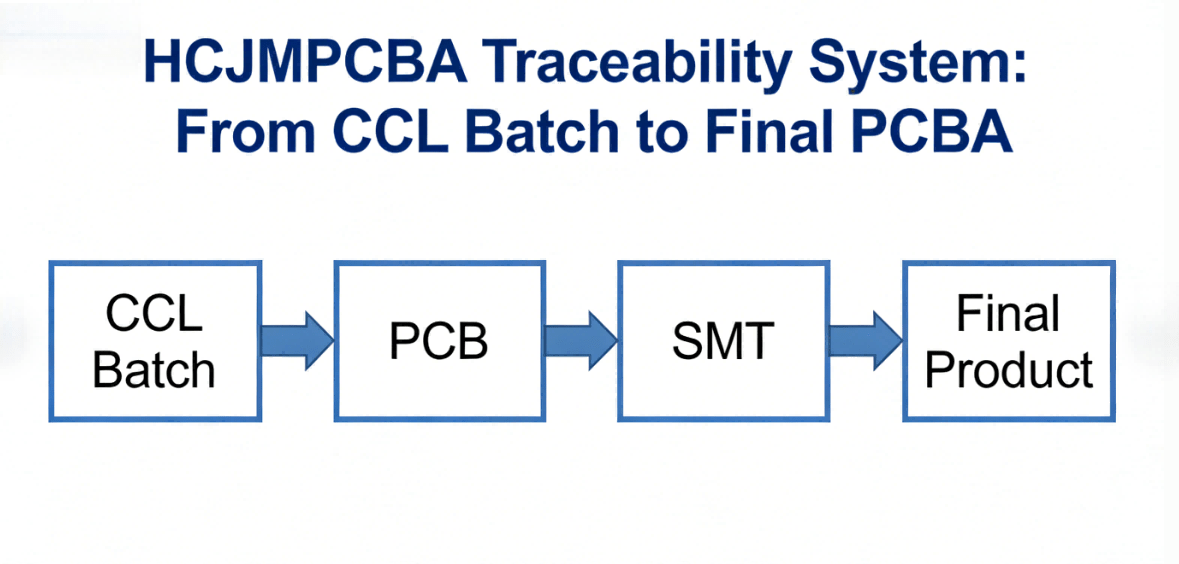
Hcjmpcba Traceability Ccl To Pcba Serial
| Metric | Testing Standard | HCJMPCBA Proof |
|---|---|---|
| Peel Strength | IPC-TM-650 | Raw Data Logs |
| Thermal Stress | IPC-TM-650 | Microsection Images |
| Flammability | UL94 | Certification Reports |
| Insulation Resistance | IPC-TM-650 | IR Test Data |
“All copper clad laminates must comply with IPC-4101 standards. The supplier shall provide full traceability (lot/batch/serial) and raw data validation. No substitution is permitted without formal revision approval.”
A medical OEM experienced:
Root cause:
→ Incorrect ccl chemical resin selection
HCJMPCBA solution:
Q:What is copper clad laminate used for?
A:It forms the base of all PCB structures.
Q:What does CCL mean?
A:Copper Clad Laminate.
Q:How are copper clad laminates classified?
A:By reinforcement, resin, and performance metrics.
Q:Why is copper clad laminate price fluctuating?
A:Driven by copper cost + resin supply chain.
Q:Difference between rigid and flexible CCL?
A:Rigid = FR-4, Flexible = Polyimide.
Q:Can HCJMPCBA provide raw data?
A:Yes — full traceability and test data available.
At HCJMPCBA, every copper clad laminate used in production is verified through a structured validation system:
– Material certification aligned with IPC-4101 standards
– Incoming inspection based on statistically defined Sample Plans
– Real-time Raw Data logging for lamination and thermal processes
– Full Traceability (lot/batch/serial) linking CCL batches to final PCBA
This evidence-based approach ensures that no material substitution or batch inconsistency can impact production reliability.
We provide:
Update triggers: standard revision changes / recurring questions / production checklist updates.
Since its establishment in 2010,Guangzhou Huachuang Precision Technology Co.,Ltd.has focused on the
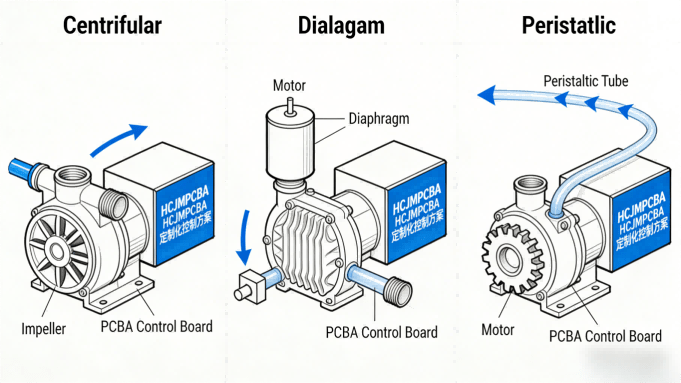
Discover what small water pumps are, its core types (submersible, solar, electric), and key applicat
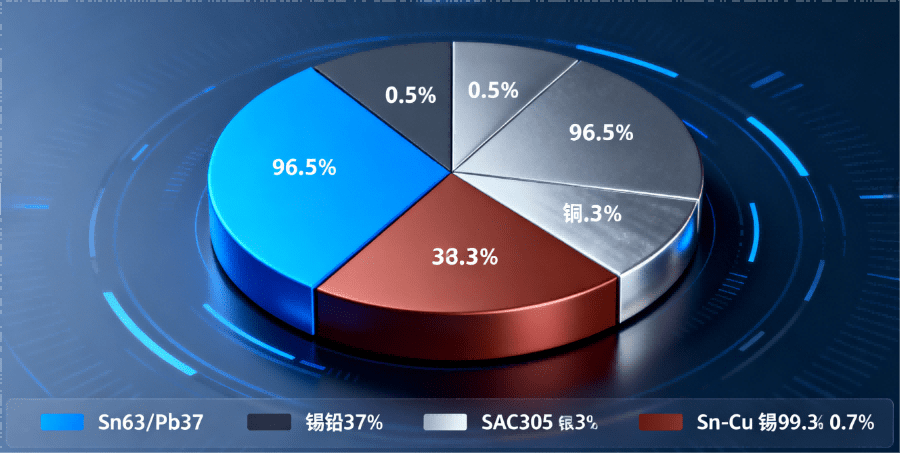
Learn the difference between leaded solder and lead-free solder material, including their compositio