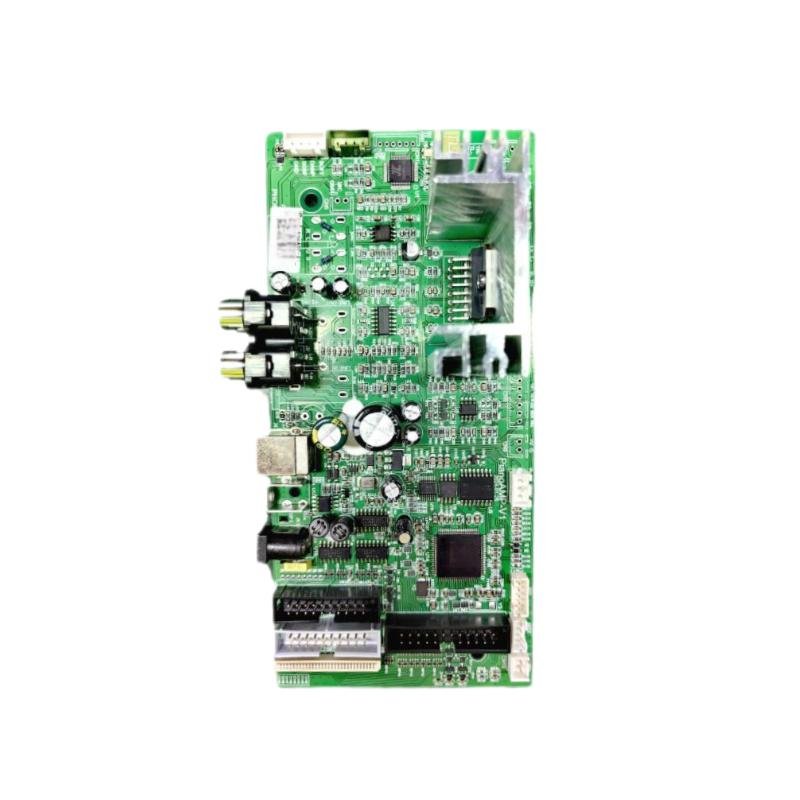
What Is Medical PCB Assembly—and How to Navigate the Medical PCB Supply Chain?
Medical PCB assembly is essential for creating reliable, high-precision electronic medical component

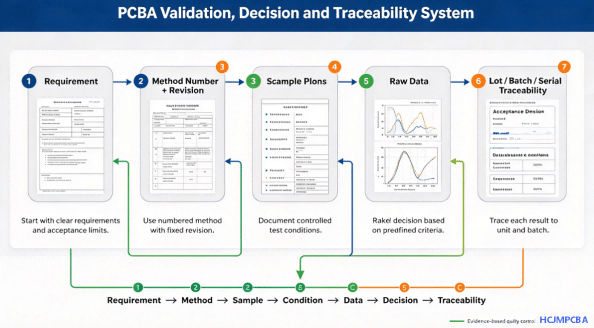
In the current landscape of AI-driven hardware and mission-critical medical electronics, “Quality Control” is no longer just a checkbox—it’s an insurance policy against catastrophic brand failure. At HCJMPCBA, we understand that for a medical OEM or an industrial robotics firm, the cost of a single latent solder joint failure can exceed the value of an entire production batch.
Quality is built on the bedrock of standards. Our Guangzhou facility doesn’t just “follow” guidelines; we integrate them into our DNA.
ISO 13485:2016: Beyond simple assembly, this ensures full traceability and risk management for medical devices.
IPC-A-610 Class 3: We specialize in the “Highest Reliability” tier, where continuous performance is mandatory and downtime is not an option.
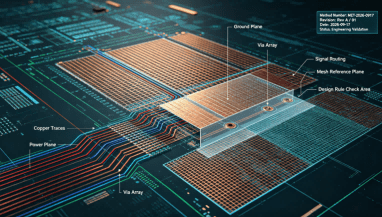
We believe quality is engineered, not just inspected. Before a single component is sourced, our engineering team conducts a Design for Manufacturing (DFM) and Design for Assembly (DFA) review. We analyze:
Thermal via placement to prevent “tombstoning.”
CTE (Coefficient of Thermal Expansion) matching for high-power AI boards.
Panelization stress points to protect ceramic capacitors.
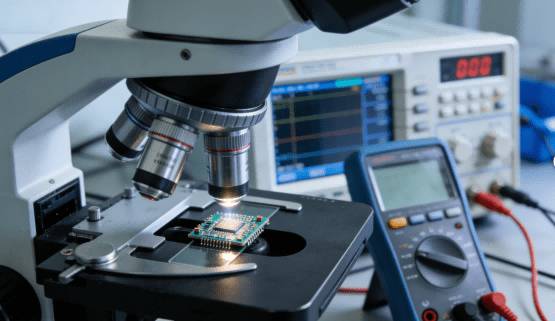
Hcjmpcba Components Under Inspection
A board is only as reliable as its weakest component. Our IQC (Incoming Quality Control) uses the MIL-STD-105E sampling plan and 3D X-ray die analysis to ensure every IC is 100% authentic and within MSL (Moisture Sensitivity Level) safety windows.
Our SMT lines utilize a “Closed-Loop” feedback system.
3D SPI (Solder Paste Inspection): Every pad is measured for volume, area, and height. If the solder deposit deviates by ±15%, the system halts.
3D AOI (Automated Optical Inspection): Post-reflow, our machines use multi-angle light sources to verify every solder fillet against IPC standards.
For BGAs with a 0.3mm pitch, visual inspection is blind. We employ Automated X-ray Inspection (AXI) to monitor voiding rates, head-in-pillow (HiP) defects, and hidden bridges. Finally, custom Functional Circuit Testing (FCT) jigs simulate real-world usage to ensure 100% logic and signal integrity.
Choosing HCJMPCBA means choosing a partner who values your brand’s reputation as much as you do. From the first Gerber file to the final Box Build assembly, we deliver precision you can trust.
Medical PCB assembly is essential for creating reliable, high-precision electronic medical component
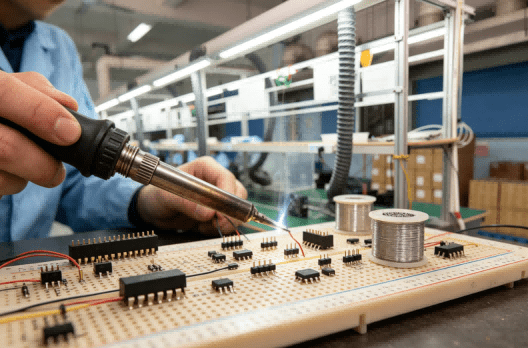
Learn what a protoboard is, how to solder and use prototype boards correctly, and how engineers tran
A budgetary quote is a preliminary cost estimate used during early PCBA development to assess feasib