What Does PCB Stand For? A Precise, Insightful Guide with ICT Tester Expertise
Discover what does PCB stand for in this comprehensive guide by HCJMPCBA. Learn about ict tester rol

This guide is maintained by the HCJMPCBA engineering team and updated with production checklists. An FR4 ANSI plate is the industry-standard fiberglass-reinforced epoxy laminate widely used as the base material for printed circuit boards. It combines woven glass cloth, flame-retardant epoxy resin, and copper foil to create a stable electrical and mechanical platform. Standard FR4 is suitable for most applications, but High-Tg and Low-Loss laminates are often required for thermal stress, high-frequency signals, or mission-critical electronics.
For engineers, buyers, and OEM decision-makers, the material chosen at prototype stage often determines whether the final product can scale smoothly to 5,000 or 50,000 units.
Even in 2026, FR4 continues to dominate global PCB production because it solves the majority of design requirements economically.
Typical reasons include:
For many products such as controllers, appliances, sensors, HMI boards, and power interface modules, standard FR4 is still the most rational material choice.
FR4 stands for Flame Retardant 4, a NEMA grade commonly used in electronics manufacturing. It is not a single brand but a material family defined by electrical, thermal, and safety performance ranges.
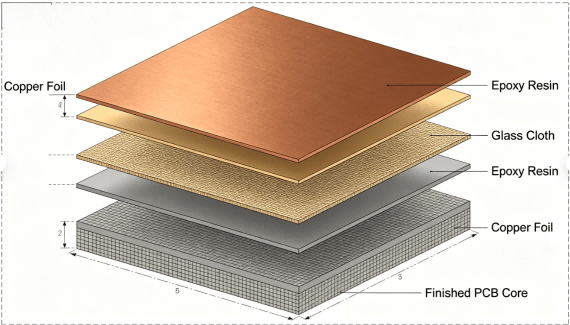
Cross Section Of Fr4 Laminated Structure
| Property | Typical Value |
|---|---|
| Dielectric Constant (Dk) | 4.2 – 4.8 |
| Tg (Standard Grade) | 130°C – 140°C |
| Density | ~1.85 g/cm³ |
| Flame Rating | UL94 V-0 |
| Volume Resistivity | High |
| Mechanical Strength | Strong |
These ranges vary by supplier and grade, which is why datasheet review matters.
Many users compare G10 vs FR4 because both use glass cloth and epoxy systems. However, the key difference is flame retardancy.
For regulated products, industrial systems, and commercial electronics, FR4 is usually the safer specification.
| Property | Standard FR4 | High-Tg FR4 | Low-Loss Laminate |
|---|---|---|---|
| Tg | 130–140°C | 170°C+ | 170°C+ (varies) |
| Thermal Reliability | Moderate | High | High |
| Signal Loss | Moderate | Moderate | Low |
| Cost Index | 1x | 1.2x–1.5x | 2x+ |
| Best Use Case | General Electronics | Industrial / Automotive | RF / High-Speed Data |
Standard FR4 may pass prototypes but fail in production environments with repeated thermal cycling.
As temperature rises near Tg, standard laminate softens, expands, and loses dimensional stability. That can create:
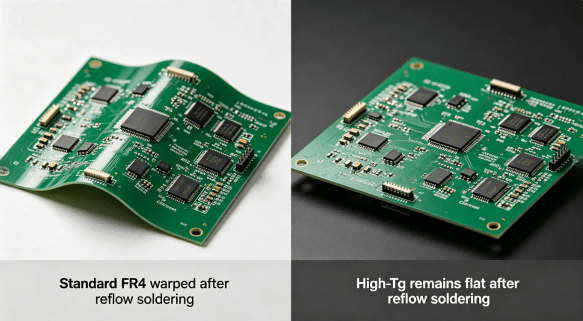
Comparison Of Warpage Between Standard Fr4 And High Tg Materials After Reflow Soldering
Once frequency rises, dielectric behavior becomes critical. Standard FR4 may still function, but performance margin decreases.
Low-loss laminates offer:
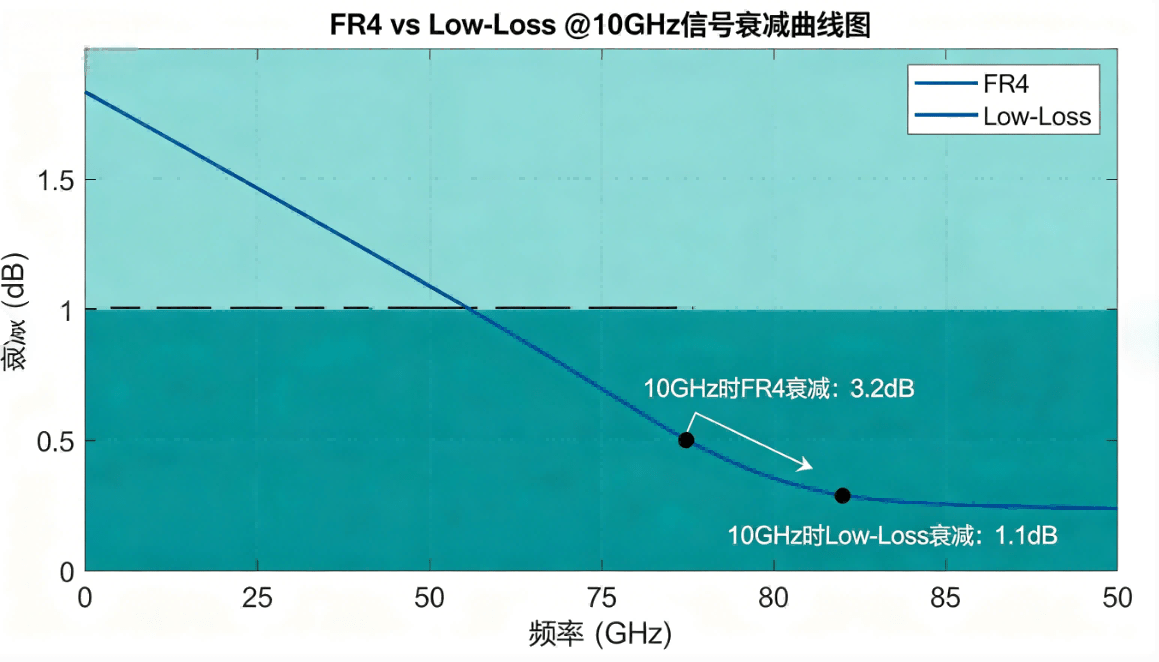
Fr4 Vs Low Loss Signal Attenuation Curve At 10ghz
The keyword trend around fr4 plate keyboard and keyboard pcb hot swap 60 comes from the mechanical keyboard community. FR4 is popular because it provides a balanced feel between metal rigidity and soft flex materials.
Why users choose FR4 keyboard plates:
Although this differs from industrial electronics, the same manufacturing discipline applies: tolerance control, hole precision, flatness, and consistent panel processing.
Identify continuous operating temperature, storage temperature, and worst-case hotspot temperature.
If sustained temperatures approach 130°C, review High-Tg options.
How many soldering cycles? Selective solder? Rework? Double-sided reflow?
More thermal cycles = more need for robust laminate systems.
If traces carry high-speed digital or RF signals, estimate acceptable loss budget.
Above several GHz, standard FR4 may no longer be optimal.
Consider:
This is especially relevant for robotics and transport systems.
The cheapest material can become the most expensive if it causes field returns, redesigns, or delayed certification.
Many failures appear months after shipment.
Examples include:
The board may pass outgoing inspection but fail in real use conditions.
That is why laminate selection should be treated as an engineering decision—not a commodity purchase.
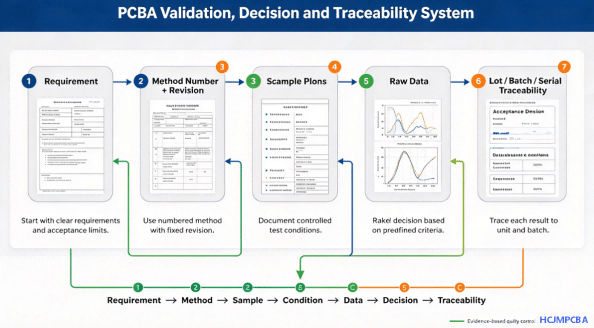
At HCJMPCBA, material consistency is managed through a process system rather than guesswork.
Each product build is linked to a controlled process version covering:
This helps ensure repeat orders remain consistent.
Before mass production, engineering verifies:
Where required, production data may include:
Material and production history can be linked for quality investigation and long-term support.
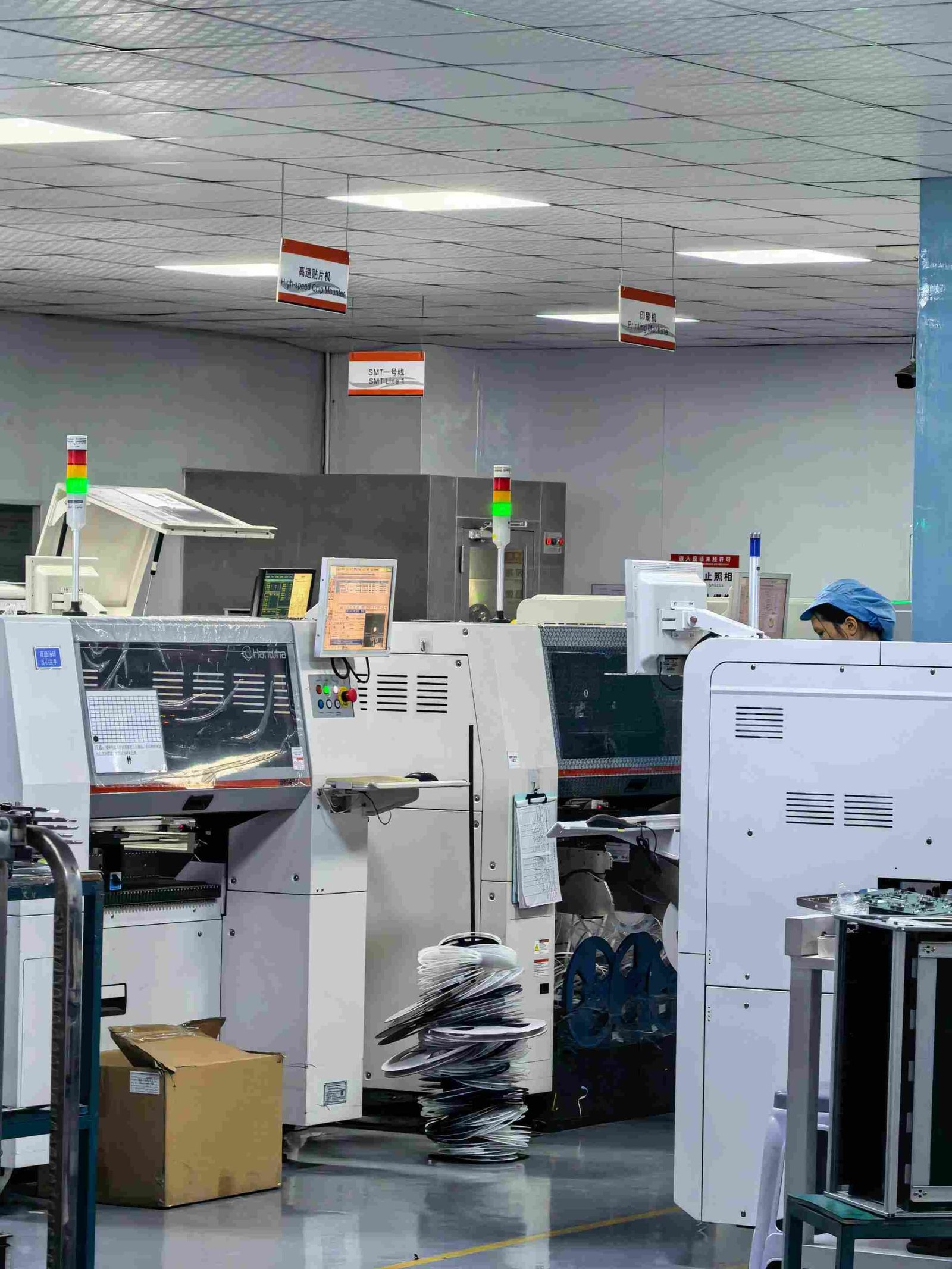
Hcjmpcba Smt
| Checkpoint | Why It Matters | Recommended Evidence |
|---|---|---|
| Flatness | Assembly accuracy | Visual / Gauge Record |
| Material Grade | Correct performance level | CoC / Datasheet |
| Solderability | Assembly yield | Process Validation |
| Electrical Test | Open/short protection | Test Report |
| Traceability | Root cause support | Lot / Batch Record |
All PCB materials must comply with the approved specification and declared laminate grade. No substitution is permitted without written engineering approval. Supplier shall maintain lot traceability, provide conformance documentation, and confirm compatibility with assembly thermal processes and electrical performance requirements.
A prototype may work perfectly at 5 units because build variation is small and field exposure is limited. But at 5,000 units:
This is where disciplined process control becomes essential.
What is FR4 in PCB manufacturing?
FR4 is a flame-retardant fiberglass epoxy laminate used as the structural base of most PCBs.
What does FR4 ANSI plate mean?
It commonly refers to an FR4 sheet or plate material used for PCB fabrication or structural applications.
Is FR4 better than G10?
For electronics requiring flame resistance, FR4 is usually preferred.
Can I use FR4 for high-power LED boards?
Sometimes yes, but thermal design must be reviewed. Metal-core boards may be better.
When should I choose High-Tg FR4?
When thermal cycling, high temperatures, or reliability requirements exceed standard FR4 capability.
When should I choose Low-Loss laminate?
For RF and high-speed digital systems where signal loss matters.
Is FR4 good for keyboard plates?
Yes, many custom keyboard builders prefer FR4 for balanced feel and cost.
Can HCJMPCBA help with material selection?
Yes. Engineering review and manufacturability guidance can be provided before production.
Need help choosing between standard FR4, High-Tg, or Low-Loss materials for your next PCB project? HCJMPCBA supports OEM customers with engineering review, controlled sourcing, scalable SMT assembly, and repeatable mass production quality. Contact our team for a fast quotation.
Update triggers: standard revision changes / recurring questions / production checklist updates.
Discover what does PCB stand for in this comprehensive guide by HCJMPCBA. Learn about ict tester rol
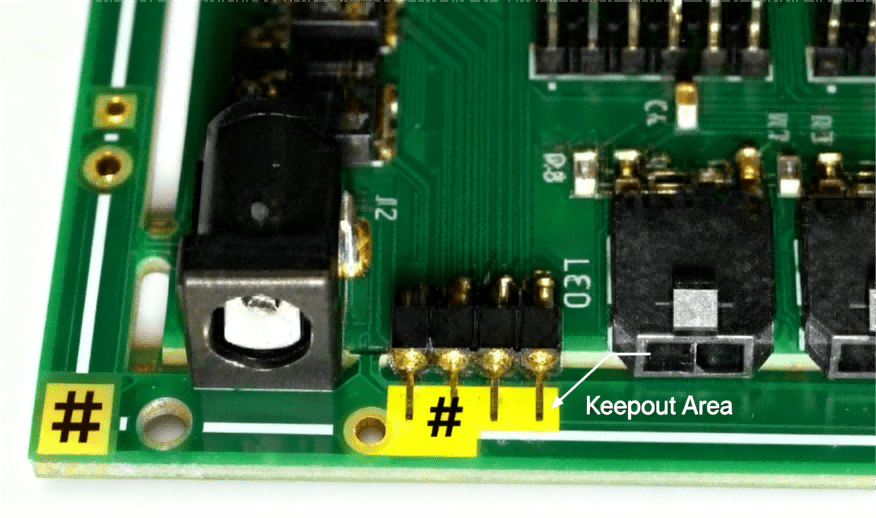
A keepout on a PCB is a software-enforced exclusion zone that prevents copper, vias, or components i
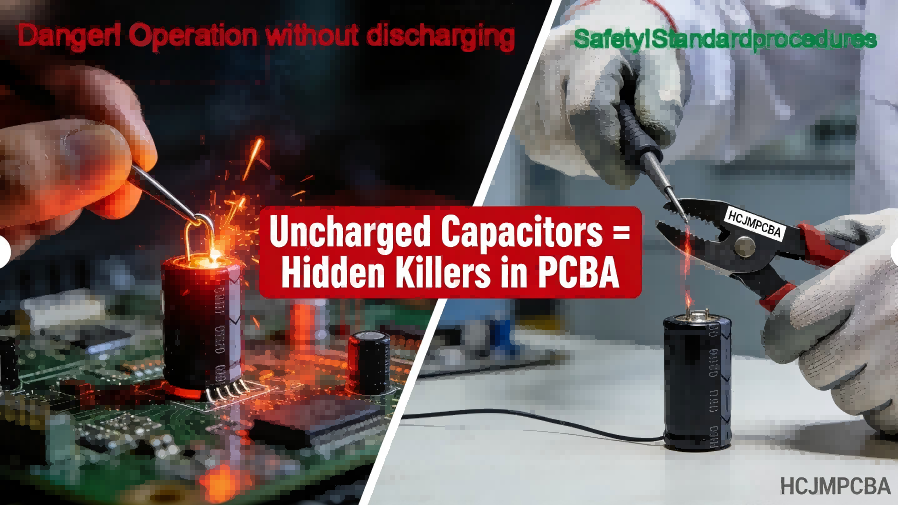
Discharging capacitors is a critical safety and quality control step in electronics and PCBA work. T