7 Critical Dimensions of Ball Grid Array (BGA) Quality Control: The Definitive Industrial Guide to Zero-Defect PCBA
What is a Ball Grid Array (BGA) and how do you ensure quality control in BGA components? This guide

As PCB assemblies become smaller, denser, and more complex, manual visual inspection is no longer sufficient for reliable SMT quality control.
Modern PCB assembly projects often include:
In high-mix low-volume (HMLV) manufacturing environments, these challenges become even more difficult because production lines must constantly switch between different products, component packages, and process settings.
Under these conditions, even experienced operators may miss:
This is why 100% AOI (Automated Optical Inspection) has become an important part of modern PCBA process control rather than simply an optional inspection step.
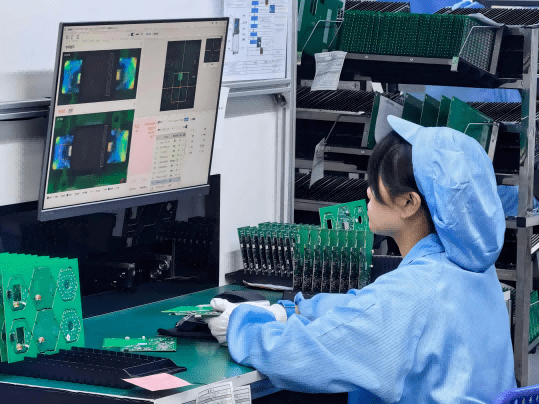
100% Aoi Inspection During Smt Production Hcjmpcba (2)
Many OEM buyers assume low-volume production is easier than mass production.
In reality, HMLV manufacturing often creates more quality risks because:
For example, one production line may build:
Every product switch increases the probability of:
This is where consistent AOI verification becomes valuable.
AOI systems compare captured PCB images against approved manufacturing references.
Modern AOI inspection can detect:
Compared with manual inspection, AOI improves:
It also reduces dependence on operator experience alone.
“If the factory has AOI, quality problems will disappear.”
In practice, AOI is only one part of a complete manufacturing quality system.
AOI works well for visible surface defects, but it cannot fully inspect:
For complex PCB assemblies, additional verification may include:
At HCJMPCBA, AOI is typically integrated together with process verification and engineering review rather than used as a standalone inspection method.
This is especially important for:
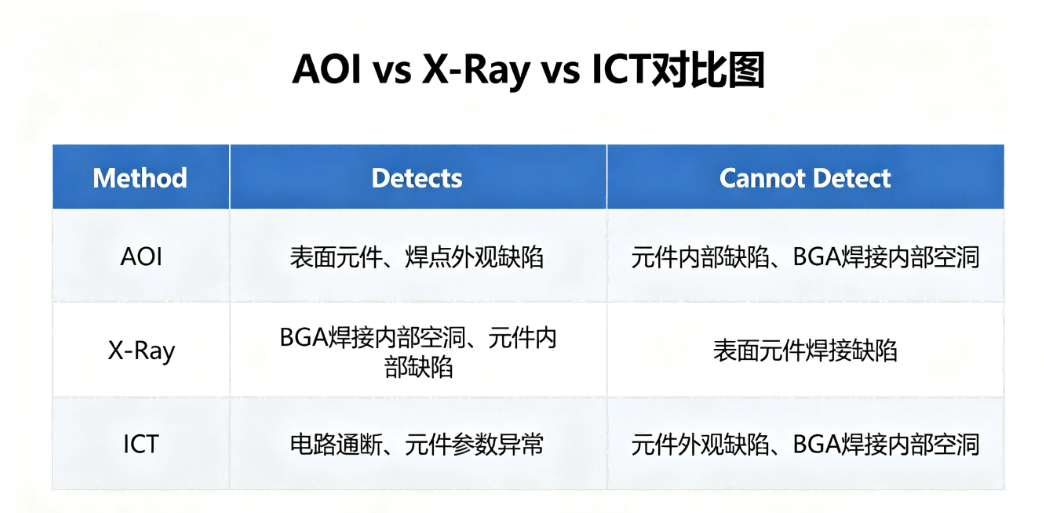
Comparison Of Three Detection Methods Oi, X Ray And Ict Hcjmpcba
Many suppliers advertise:
But OEM customers are usually more concerned about:
In real production environments, quality issues are often linked to:
For this reason, professional PCBA manufacturing should include:
At HCJMPCBA, manufacturing projects can be associated with:
to reduce uncontrolled manufacturing changes during mass production.
The effectiveness of AOI depends heavily on where it is placed in the SMT process.
AOI or SPI can detect:
Inspection focuses on:
This is the most common AOI position because solder-related defects become fully visible after reflow soldering.
Factories that only perform end-of-line inspection may miss opportunities to stop process drift earlier.
One overlooked challenge in HMLV environments is AOI false alarms.
If AOI programming is poorly optimized:
Efficient AOI management therefore depends not only on hardware capability, but also on:
As PCB assemblies become increasingly customized, software management and process discipline are becoming just as important as SMT hardware itself.
Instead of only asking:
“Do you have AOI?”
OEM buyers should also request:
These factors often determine long-term manufacturing consistency more than equipment lists alone.
As PCB assemblies continue moving toward higher density and shorter product cycles, 100% AOI inspection has become an important part of risk reduction in HMLV manufacturing environments.
However, reliable PCB assembly quality depends on more than inspection hardware alone.
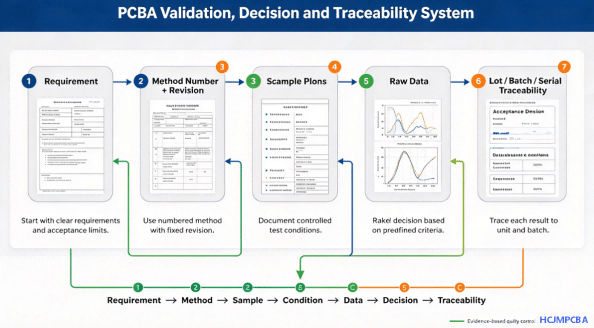
Consistent engineering control, revision management, traceability, process discipline, and verification workflows all play critical roles in reducing manufacturing defects and improving long-term product reliability.
For OEMs, engineers, and procurement teams, evaluating a PCBA supplier should involve understanding how inspection data, process control, and manufacturing traceability work together throughout production — not simply whether a factory owns AOI equipment.
What is a Ball Grid Array (BGA) and how do you ensure quality control in BGA components? This guide
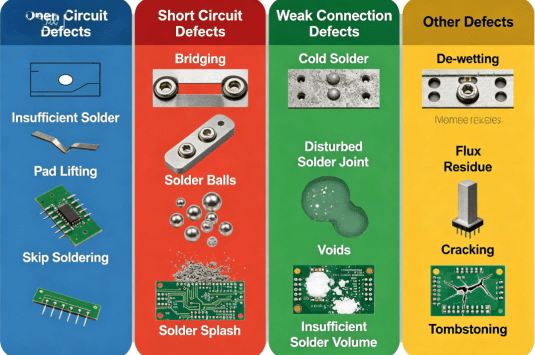
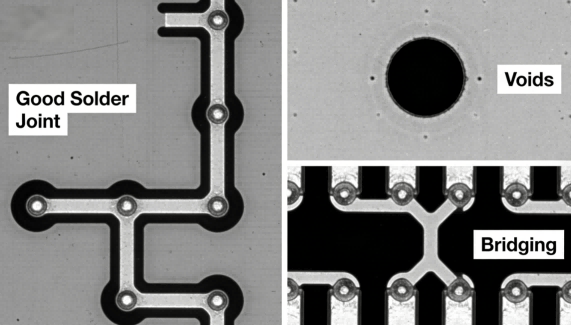
Soldering defects — cold joints, bridging, tombstoning, and voids — are the leading cause of PCB
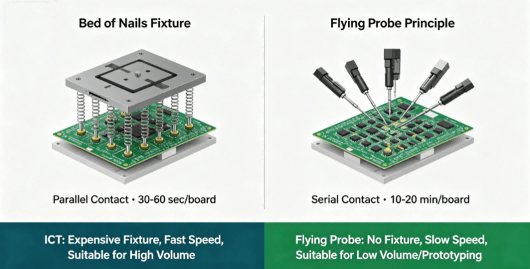
ICT and flying probe testing serve different production phases and volumes. Guangzhou Huachuang Pr